AI Receptionist for Small Business: Tasks to Automate First

Five missed calls a week. It sounds minor until the maths kicks in. For appointment-based businesses, those unanswered rings can quietly drain hundreds of pounds in lost bookings every month. Add the after-hours enquiries that never get returned and the staff hours spent on routine call handling, and the picture becomes clearer. Small businesses are starting to ask a smarter question: which reception tasks should an AI handle first?
Why automation order matters more than automation speed
The most common mistake we see? Small businesses automate the "coolest" feature first rather than the most painful gap. A shiny AI callback system sounds impressive until you realise it's chasing leads that were never properly captured in the first place.
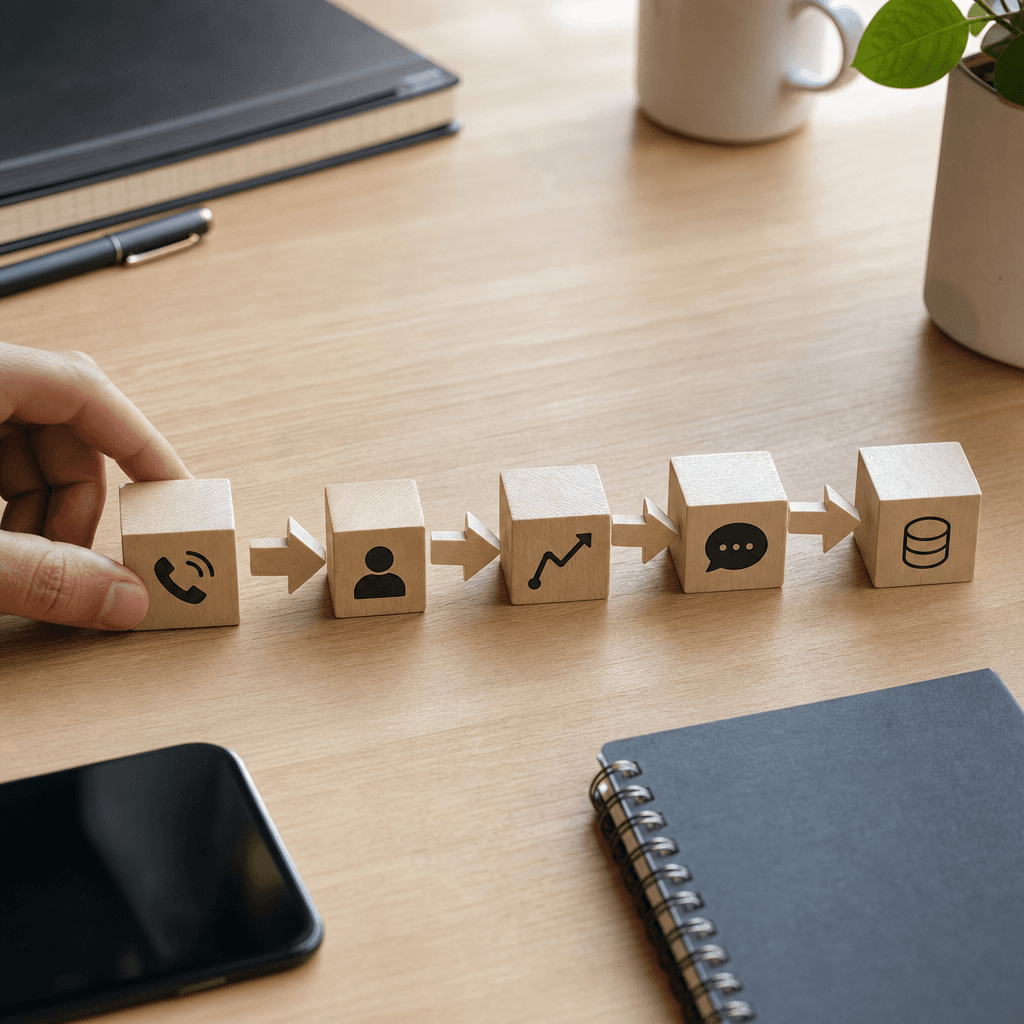
There's a natural sequence to operational workflows: answer, capture, route, follow-up, sync. Each step depends on the one before it. Automating out of order creates friction instead of flow. Routing calls before you can capture caller details leads to angry transfers and repeated explanations. Following up before proper routing means chasing enquiries that went nowhere. Syncing to a CRM before capturing complete information just moves bad data faster.
Routine tasks like call routing, scheduling, and FAQ handling consume significant staff time. Hours that could go toward growth activities, customer relationships, or service improvements. The businesses getting real results from automation aren't necessarily moving fastest. They're moving in the right order.
This is where self-assessment becomes useful. The biggest pain point in your current workflow determines where automation will have the most immediate impact. A clinic losing bookings to missed after-hours calls has different priorities than a trades business drowning in scheduling admin.
Your starting point shapes everything that follows.
If you are losing customers to missed calls, automate answering first
The signs are hard to miss. Voicemails from potential customers who never call back. Staff mentioning they were too busy to pick up. After-hours enquiries that sit until morning, often too late.
Missed calls represent significant revenue loss for appointment-based businesses. A handful of missed calls weekly can add up to hundreds of pounds in lost bookings monthly. The maths is straightforward:
Step 1: Calculate your exposure Five missed calls per week, multiplied by an average booking value of £80, multiplied by four weeks. That's £1,600 in monthly revenue at risk. For many small businesses, this number alone justifies the conversation about automation.
Step 2: Recognise the dependency Nothing else in the workflow matters if the call never gets picked up. Routing systems, CRM syncs, follow-up sequences. All useless without that initial connection. Answering is the foundation everything else builds on.
Step 3: Address the availability gap Customers don't reach out only during business hours. A virtual receptionist provides 24/7 availability, eliminating the "wait until morning" problem entirely. The enquiry that comes in at 8pm gets handled at 8pm, not the next day when they've already booked with someone else.
Step 4: Remove the staffing bottleneck Peak hours, lunch breaks, sick days. Every call gets answered regardless of staff availability. The phone rings, someone answers. Every time.

If leads slip through the cracks, automate capture and CRM sync next
The warning signs are familiar. Caller details scrawled on sticky notes. Lead information scattered across spreadsheets, email threads, and someone's memory. Qualified prospects discovered weeks after they first called, long after they've gone elsewhere.
Answering the phone solves half the problem. Capturing the information properly solves the other half.
The sequence matters here. Capture depends on answering, you need the call to capture. But routing depends on capture, you need details to route intelligently. Skipping ahead creates chaos.
Manual data entry costs more than most businesses realise. Three hours weekly spent transferring caller details into systems, multiplied by £15 per hour, multiplied by 52 weeks. That's £2,340 annually in admin time alone, before accounting for error correction. And errors are inevitable when humans transcribe details under pressure.
The numbers from businesses with automated data flow tell a clear story. 35% fewer billing errors. 25% faster cycle times. Clean data moves faster and breaks less.
CRM integration is where an AI answering service proves its value beyond basic call handling. Caller details, appointments, and notes sync automatically. No retyping. No lost sticky notes. No discovering three weeks later that a high-value lead slipped through.
The better implementations connect directly with existing CRM systems rather than creating another data silo. Information flows where it's needed, when it's needed.
If qualified leads wait too long, automate routing and follow-up
The pattern is predictable. A qualified lead calls, gets answered, details captured. Then nothing happens for 24 hours. By the time someone follows up, they've already booked elsewhere. Or worse, customers complain about being transferred three times before reaching the right person.
Hot leads cool off quickly. The data is sobering: a 24-hour delay in follow-up can cut conversion rates in half. A £500 lead followed up promptly might convert at 40%. The same lead contacted a day later? Closer to 20%. That's £100 lost per delayed response. Multiply that across a month of enquiries and the cost becomes substantial.
Once calls are answered and details captured, intelligent routing becomes possible. The right enquiries reach the right team members based on request type, urgency, or customer history. No more blind transfers. No more customers explaining their situation for the third time.
The sequence dependency here is worth noting. Routing without proper capture means transferring calls blindly. Follow-up without routing means chasing leads that a colleague already handled. Each step builds on the one before.
Multi-channel capability matters too. Effective systems handle voice, SMS, WhatsApp, and web chat. WhatsApp CRM automation enables appointment reminders, order confirmations, and satisfaction surveys to run automatically. Follow-up happens across the channels customers actually use, not just the one they happened to call from.
The businesses seeing the best results treat routing and follow-up as a connected system, not separate tasks.
If your team drowns in repetitive questions, automate FAQ handling
The signs are unmistakable. Reception staff answering the same five questions dozens of times daily. Opening hours. Pricing. Availability. Location. How to book. The repetition is relentless.
Routine tasks like FAQ handling consume significant staff time that could be redirected to higher-value work and complex customer needs. The cost calculation makes this concrete: 30 repetitive calls daily, multiplied by 3 minutes each, multiplied by £12 hourly wage. That's roughly £9 daily or approximately £180 monthly spent on reading opening hours aloud.
Staff hired for their problem-solving skills shouldn't spend their days repeating information that could be on a sign.
The sequencing here matters. FAQ automation only makes sense once answering and capture are solid. Otherwise, the AI handles routine questions brilliantly while new customer calls still ring out. The foundation comes first.
With the basics in place, automating FAQs frees reception staff for work that actually requires human judgment. Complex enquiries. Complaints that need empathy. Relationship building with key accounts. The tasks that justify their salary and expertise.
For SMEs, combining these capabilities creates a complete front-desk system without additional headcount. An AI receptionist for SMEs handles the volume while existing staff handle the value. The phone gets answered, details get captured, routine questions get resolved, and humans step in where humans are needed.
That's the real efficiency gain. Not replacing people, but deploying them properly.
Build your automation roadmap in the right sequence
The pattern across successful implementations is consistent. Businesses that automate in sequence see compounding returns. Those that jump around create expensive gaps.
A simple decision tree clarifies the starting point. Primary pain point is missed calls? Answering comes first. Leads captured but lost in sticky note chaos? CRM sync is next. Qualified prospects going cold? Routing and follow-up take priority. The sequence follows the gap.
The combined savings tell a compelling story. Monthly missed call revenue at risk: £1,600. Annual manual data entry costs: £2,340. Conversion losses from delayed follow-up: potentially thousands more depending on lead volume. Layered together, small businesses often uncover £5,000 to £10,000 in annual inefficiency hiding in plain sight.
The 48-hour average onboarding to productivity means these results aren't theoretical. Businesses see impact within days, not months. No lengthy implementation cycles. No waiting for ROI to materialise.
Each step creates the foundation for the next. Capture depends on answering. Routing depends on capture. Follow-up depends on routing. CRM sync ties it all together. Breaking the sequence breaks the system.
A simple audit this week makes the path clear. Count missed calls. Estimate hours spent on manual data entry. Track how long follow-ups actually take. The numbers reveal the starting point.
Automating in sequence means each improvement compounds. The alternative is scattered technology creating scattered results.
See how Voicelabs helps small businesses automate reception tasks in the right order. Explore our AI receptionist for SMEs.